Instructional Technologies

Home of Pro-TREAD Online Training
All Articles Under the Driver Training Category

Pre-Trip Inspection: Train Your Drivers to Understand Vehicle Maintenance CSA Rules

Vigillo's Top 10 CSA Violations show that basic pre-trip inspections could dramatically reduce vehicle maintenance CSA scores.

Of the top ten CSA violations, seven could be prevented with one simple step: a pre-trip inspection by your drivers. Inspecting the truck before driving is the law, and yet 70% of CSA violations are truck-related!

Over on LinkedIn (login req’d), managers asked: “How do you really know that your drivers are doing a proper vehicle pre-trip inspection?” Sure, your drivers may be checking all the boxes on their daily vehicle reports, but are they actually inspecting their trucks?

It’s a great discussion, with several real-world suggestions.

  • Tie a red ribbon around the dipstick or something else they need to check.
  • Bring in a DOT inspector for everyone to watch what they inspect.
  • Have the manager do spot checks weekly to show “it really matters.”
  • Reward, rather than punish, finding problems.

Managers Agree: It’s All About Training and Repetition

But the advice, again and again, came down to training the drivers about what to look for in a pre-trip inspection, and what a DOT inspector will ding them for. You can’t assume that drivers — even experienced truckers — have been trained by someone else to inspect brakes, belts, or even tire pressure!

New Pre-Trip Inspection Lesson, Including CSA Infractions

Today, you’ll be happy to know that we’ve *radically* updated our pre-trip inspection lesson. It provides your drivers the specific knowledge they need to do a pre-trip inspection. It gives them a checklist to use, and tests their knowledge of what to look for. And it’ll give them the confidence that they can do the inspection in less than 10 minutes.

Our training tests their knowledge along the way, and tells them the severity and weight of violations in CSA.

See the Pre-Trip Inspection Lesson Yourself

This video is just a short teaser of our full, one-hour lesson. (Want the full demo? Just drop us a line.) Though the lesson takes an hour, a pre-trip inspection should take much less time. And the more your drivers do it, the faster and more thoroughly they’ll inspect the truck.

Pre-Trip Inspection Lesson Outline

  • Introduction
  • Importance of a Pre-trip Inspection
  • Inspection Requirements
  • Areas of Focus
  • Getting Started
  • Cab and Under the Hood
  • Walk Around Inspection
  • Tractor Checkpoints
  • Coupling System Checkpoints
  • Trailer Checkpoints
  • Inside the Cab
  • Vehicle Controls

CVSA Out-of-Service Criteria Don’t Match CSA Regulations

Lastly, your fleet is in a heap of trouble if inspection reports are ignored by your maintenance team, or if your maintenance team lacks the money or manpower to address them: an excellent article from Vigillo and Aon discusses this. We highly recommend it, because the criteria from the CVSA don’t always match what a CSA inspector will flag.

Fewer Speeding Tickets for Your Truck Driver

Keeping up with traffic. In a hurry. Getting around an unsafe driver. Running late. There’s never a good excuse for a truck driver to get a speeding ticket. Under the new CSA, those speeding infractions stick with your driver for three years, and pile on to your company’s CSA score for two years.

Speeding is like a little snowball that turns into an avalanche of fines. Because being pulled over for speeding means the state trooper might conduct an inspection and find other violations.

Slowing down your drivers requires a cultural change. Training like our speed management course is an important step to sending the message that it’s bad for everyone. If we can help you change the culture in your fleet, get in contact with us. We’re happy to talk through what we’ve learned from hundreds of our other clients over the past decade.

Skill Beats Luck


A note from our CEO about driver training in truck fleets that’s worth sharing:

I’ve been writing about Safety, Security and Compliance lately. There is an interesting notion in trucking about the 300-30-1 rule. The idea is that if someone performs an unsafe act, 300 times nothing will happen. About 30 times, it causes a close call with very minor damage. And 1 unlucky time, it’ll cause a serious accident that results in really hurting some poor person. Or killing them.

A lot of management in the trucking industry play the odds — they just rely on luck rather than take the pro-active approach of quality training.

Reading this brought back to me the motto of the Field Artillery (where I spent 10 years): cedat fortuna peritis. It means “Skill Trumps Luck.”

How many trucking companies depend largely on “luck” to control their accident rate? A company that trains drivers twice a year? A company whose idea of training is to let older drivers tell “war stories” to drivers once a quarter? A company that picks training that costs the least or takes the least amount of time? Training isn’t mandatory, but neither is survival.

Avoiding Fixed Objects: A Lesson to Stop Parking Lot Crashes

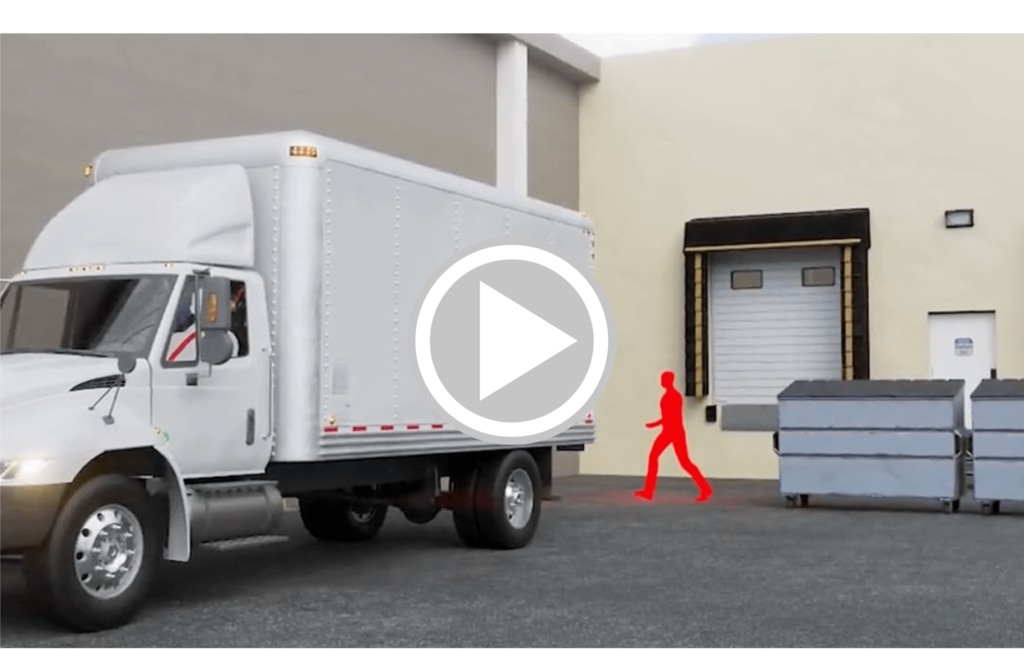
While talking to managers and safety folks earlier this week at the IFDA show, we heard a lot of groan-inducing stories about drivers hitting fixed objects with their trucks. There’s nothing more frustrating because that kind of accident is totally preventable. So we spent a lot of time showing our “Avoiding Fixed Objects” lesson, and here’s a quick preview of this 30-minute course that every driver should take.

Without revealing any names, here are a few doozies we heard about:

  • A driver hit a gas meter at a mall, which caused the mall to be evacuated.
  • A driver hit an awning on a church, which pulled over the entire brick facade. Of a church, it bears repeating.
  • A driver hit a transformer at a grocery store, knocking out power.
  • A driver tore off a fire escape from a building in an alley.

Chains Required on I-70 in Colorado

Yep. It's already snowing in Colorado.

A new Colorado chain law says all commercial vehicles and trucks must carry chains on I-70 between milepost 133 (Dotsero) and milepost 259 (Morrison). According to the ATA, the fines are hefty, especially if the truck without chains ends up blocking traffic.

It’s only part-way through October now, but winter is officially here in the western states. It’s snowing in the Rockies, and it’s snowing in the Cascades today (that picture on the left is from our friend who lives in Golden, CO.) But it’s never too late to get your team of drivers to start thinking about winter driving conditions.

Check out the video below from our Winter Driving lesson (which, by the way, is an EXCELLENT lesson. Go take a look at the Winter Driving course description.)

Chains must be carried on trucks between Sept. 1 and May 31 along I-70 between Dotsero and Morrison, CO. One look at the elevation profile tells you why.

Part 2: Driving Safely at Night — Better Night Vision for CDL Drivers

Maintaining your night vision while driving at night is key to remaining safe. This brief clip from our Night Driving lesson for CDL drivers is a good refresher. It will help drivers keep it rubber-side down when they decide to drive at night, when traffic is lighter and they can make good miles. But in addition to preserving night vision, it’s also key for drivers to manage fatigue, their speed, and the lights and reflectors on their truck. If you’d like to see the entire Night Driving lesson, just let us know. We’ll give you free access to our demo account.

The Safest Driving Town in America

Interstate 25 runs through Fort Collins, CO, which Allstate dubbed the safest town for driving in America.

A good new blog post over at Fleet Owner covers the Allstate Best Drivers Report, in which the auto insurance company names Fort Collins, CO, as the safest driving town in America. According to its data, drivers there can expect an accident once every 14 years. Compare that to the least safe driving town in America, Washington, D.C., in which drivers get into an accident every 4.8 years. Insert your own joke here about “the literal meaning of Congressional gridlock.”

Here’s a quick video from Allstate about the study, in which they emphasize what they consider to be the key components of safe driving.

Tips for Drivers of Cars and Trucks

The tips provided by Allstate below aren’t just good for car drivers (though we wish they’d all follow them), but they’re great reminders for your pros sitting in the cabs of trucks. We’ve linked to the lesson outlines in Pro-TREAD. And if you’re interested in a free demo of any of these courses (they’re about 30 minutes each), please just let us know.

  • Minimize distractions - Engaging in any other activity while driving &emdash; talking on your cell phone, text messaging, changing a radio station, putting on makeup &emdash; is a distraction. (Pro-TREAD lesson outline for Driver Distractions.)
  • Be aware of road conditions - Ice, snow, fog, rain – all of these weather conditions require extra caution and slower speeds. (Pro-TREAD lesson outline for Hazard Awareness.)
  • Leave a safe distance between your car and others around you - Maintain at least one car length space between your car and the vehicle in front of you for every 10 miles per hour of speed. (Pro-TREAD lesson outlines for Space Management and Speed Management.)
  • Steer clear of road rage - Reduce stress on the road by allowing plenty of time for travel, planning your route in advance, and altering your schedule or route to avoid congested roads. Remember not to challenge aggressive drivers and stay as far away from them as possible. (Pro-TREAD lesson outline for Road Rage.)
  • Maintenance matters - Ultimately, safety also depends on the maintenance of your car. Ensure that your car brakes, exhaust system, tires, lights, battery and hoses are in good working order. (Pro-TREAD lesson outline for Preventative Maintenance.)

Northeast Drivers Hunker Down for Long Winter

After Hurricane Irene's damage to all the roads in Vermont, it might be a tough winter of driving as the state routes trucks through some winding mountain roads.

Happily, most predictions about the devastation from Hurricane Irene turned out to be overblown, excuse the pun. Except for the folks in New England. The roads for carriers in Vermont face a very difficult winter, as the construction season there ends around Halloween. Already, route and trip planning are at a premium there, as trucks scramble to get supplies to the “islands” of towns in Vermont.

According to Transport Topics:

The storm dealt a serious blow to Vermont, causing damage to 260 roads and scores of bridges, news reports said. Late last week, the state had 63 roads closed, and there were concerns about 30 bridges, said Sue Minter, deputy secretary of transportation for the state.

The governor says the state is using quick-build bridges from the military to span rivers. It’ll be important for drivers to know about them, and to understand any weight limits or different road surfaces. Communication among drivers and carriers will be critical.

In addition, many routes are being sent over small, winding mountain roads to avoid the valleys that took the brunt of the damage. And in the already dicey winter driving conditions faced by those with Vermont routes, that could make for some adventurous driving.

If you haven’t already, please consider a little training for your fleet up there. Pro-TREAD offers several number of 30-minute lessons that other drivers say are genuinely helpful. We’d love to demo any and all of these lessons for you for free before you assign them to your drivers.

  • Winter Driving with Chains
  • Winter Driving without Chains
  • Emergency Maneuvers
  • Hazard Awareness
  • Hazard Communications
  • Avoiding Roadside Collisions
  • Rollover Prevention (including Mountain Roads)
  • Skid Control

Combined with the stalemate over the federal funding for transport, there’s no guarantee that spring will bring much relief. It may be a tough winter of driving ahead, but you can put safety first and help those towns by getting supplies delivered with just a little training.

Hurricane Safety for Truck Fleets

Hurricane Irene will be kicking off the hurricane season this weekend, so now’s your last chance to start thinking about contingency planning, communications, and training. We posted a quick snippet about dealing with crosswinds from our Hazard Awareness driver training below.

In addition, we’ve been talking to fleet managers from our customer base, and here’s a few tips they’ve been sharing:

  • No load is worth your life or the life of other people on the road. If it gets crazy, get off the road. Period.
  • Civilians will have their cars stuffed to the roof with all their earthly possessions, and will probably be a little crazy as they flee the hurricane. Be careful. Be patient.
  • Crosswinds with a light load make you more likely to tip over or to jackknife.
  • Crosswinds can blow you into other lanes — stay alert.
  • Hydroplaning can be terrifying: get your foot off the accelerator and ease onto the brakes.
  • Once you’re stopped, if you need to communicate with your family or dispatch, use texting as much as possible vs. phone calls. Text messages use less bandwidth, and are more likely to get through an overloaded cellular system.

If you’re a customer, you might suggest that your drivers login in at ProTREAD.com and take one or more of the following lessons:
  • Hazard Awareness
  • Skid Control
  • Speed Management
  • Rollover Prevention
  • Tanker Rollover Prevention
  • Communication
  • Emergency Maneuvers
  • Emergency Response Plans

Enhanced Defensive Driving

Ever wonder what lesson is used most by our fleets and clients? It’s Defensive Driving by more than 50% over the next lesson (which is CSA, if you’re keeping track).

So we added even more tips and suggestions that go beyond the basics. It’s a must-watch for every driver. (Also remember, we have our Spanish-language basic defensive driving lesson.)

Interested in a demo? Fill out this demo-request form, and we’ll call you back with a demo login.

CSA Training: “Get It” in Just 45 Minutes

Never let it be said that the trucking industry ever let facts get in the way of strong opinions.

Case in point: the CSA regulations. We hear all the time about how CSA hurts the drivers, hurts the fleets, makes the roads more dangerous, and will bring about armageddon by 2013. Yet a survey by ATRI showed nearly 90% of drivers get some very important and basic facts about CSA wrong. And based on our conversations, drivers aren’t the only ones working with the wrong information: maintenance, dispatch, executives, you name it. You can argue all you want about the impact of CSA, but there’s two facts you can’t argue:

  1. CSA is here and in-force.
  2. Lots of people are flat-out wrong about what’s expected under CSA.
Understand CSA and Earn More
So we re-built our CSA lesson to focus on what is expected of drivers and fleets. This new training course is longer than most, about 45 minutes, and covers the basics. It covers the rules, the types of infractions, and the types of penalties. We have a dozen other courses that cover details such as safe driving, driver wellness and cargo securement. But this new lesson is about understanding what the rules are.

CSA Overview (45 minutes)

This lesson provides a detailed view of the impact of CSA, how CSA functions, and how maintain a low CSA score.
What is CSA?
Safety Measurement System
Individual Driver Records and Data Access
Knowing the BASICS
Inspections
Violations
Intervention
The Consequence of Intervention
Scoring Violation Severity Weight
Violation Severity Weight
Red Flag Violations
Pre-Employement Screening
Preparing Yourself

Like all Pro-TREAD online lesson, it is “mastery training,” meaning that the student must correctly answer quiz questions to advance (and finish!) the training.

Interested in a demo of the newest CSA training? Sign up for a demo, and we’ll call you back with a demo login.

Survey: Drivers’ Misconceptions about CSA

So what if drivers don’t understand CSA? If drivers think that the CSA rules are more draconian than before, isn’t that a good thing? No. Misconceptions and false information lead to drivers doing crazy things we could NEVER predict. More importantly, CSA puts drivers and carriers on the same team: infractions follow both the driver and the carrier. And since CSA infractions stay with a carrier after a driver has moved on, it’s more incentive than ever to keep that driver and FIX the problem with good training about CSA (which, by the way, we have).

According to ATRI, here’s some of the most common misconceptions from drivers about CSA.

(more…)

Train for the Craziness of the Road

Republished from Internet Truckstop’s September/October 2011 issue.

Why Online Training is Worth Your Time

Is training all that expensive compared to your deductible? No, it's really not.

We’ve never met a driver who believed they need training. You’ve got your CDL and years of experience. You’ve been around every inch of this country, so who are we to suggest you need training?

Rewire Your Brain to React Faster

But firemen train. Cops train. Linebackers train. And the military has “bloody drills” so they can have “bloodless battles.” Training keeps you sharp.

So why online training? Much less training with quizzes? The answer is simple: (more…)

12 Ways to Improve MPG

Good, basic tips on fuel management from Rolf Lockwood at TruckingInfo.com about how to run for fuel mileage. He culled 12 tips from personal experience, plus a number of truck manufacturers.

One subtle point he made that bears repeating, from a management standpoint, is that it’s important to (more…)

Avoiding Summer Tire Blowouts: Proper Inflation

You see so many tire blowouts during the summer, with the debris on the freeway that you have to ask: “Is this a freeway or a gator farm?”

When summer temps heat up the tarmac, it’s blowout season. And if you’ve ever had a blowout on a drive tire, you know it can be a heart-stopper. So other than only running routes in Alaska, how do you avoid a summertime tire blowout, the dreaded gator bite? (more…)